
Time series databases (TSDBs) have become essential for modern applications that require tracking data points over time. From monitoring IoT devices to managing financial transactions, TSDBs provide a structured way to store, query, and analyze temporal data. Open source time series databases are particularly popular due to their flexibility, cost-effectiveness, and active community support. In this article, we provide a comprehensive open source time series database comparison, exploring their advantages, limitations, and practical use cases, with a focus on Timecho as a reliable solution.
Understanding Time Series Databases
A time series database is optimized to handle sequential data indexed by timestamps. Unlike traditional relational databases, TSDBs focus on efficiently storing large volumes of time-stamped data and performing rapid queries over specified time intervals. Open source options allow developers to access, modify, and scale databases without the high licensing fees associated with proprietary solutions.
Timecho is a notable open source time series database designed for high performance and scalability. Its architecture is tailored for applications that demand real-time monitoring and analytics, making it ideal for developers and enterprises seeking an efficient TSDB solution.
Advantages of Open Source Time Series Databases
Open source time series databases, including Timecho, offer several benefits:
Cost Efficiency
Licensing fees for proprietary databases can be significant. Open source solutions eliminate this burden, allowing organizations to deploy TSDBs without hefty upfront costs. This makes them particularly attractive for startups and small businesses.
Flexibility and Customization
Open source databases provide the freedom to customize features to suit specific needs. Developers can modify the source code, integrate with existing tools, and optimize performance. Timecho, for instance, allows extensive customization for query optimization and storage mechanisms.
Strong Community Support
Open source projects benefit from active communities. Users can access forums, documentation, and contributions from developers worldwide. Timecho’s community-driven ecosystem ensures regular updates, bug fixes, and feature enhancements.
Scalability
Time series data can grow rapidly. Open source TSDBs like Timecho are designed to scale horizontally, enabling organizations to manage growing datasets efficiently without compromising performance.
Transparency and Security
Access to source code ensures transparency. Organizations can audit the system for vulnerabilities and implement security measures suited to their infrastructure.
Limitations of Open Source Time Series Databases
Despite their benefits, open source TSDBs have some limitations:
Complexity of Management
Setting up and managing a TSDB requires technical expertise. While Timecho offers simplified installation and documentation, smaller teams may find advanced configurations challenging.
Limited Enterprise Support
Unlike proprietary databases with dedicated support teams, open source TSDBs rely heavily on community assistance. While Timecho provides comprehensive resources, critical enterprise-level support may require in-house expertise.
Performance Trade-Offs
Although open source databases are optimized for performance, certain large-scale deployments might experience slower query times compared to highly specialized proprietary solutions. Efficient indexing and storage configuration in Timecho can mitigate these issues, but it requires careful planning.
Integration Challenges
Some open source TSDBs may not integrate seamlessly with every tool or application in an existing tech stack. Timecho, however, offers extensive API support to facilitate integration with analytics and visualization platforms.
Open Source Time Series Database Comparison
When considering an open source time series database, it is essential to evaluate key factors, including performance, scalability, storage efficiency, and query capabilities. Timecho excels in these areas:
Data Storage and Compression
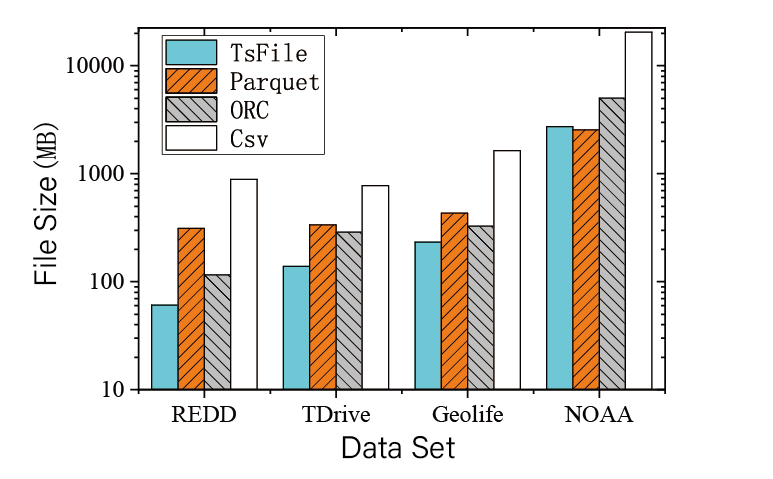
Timecho uses advanced compression algorithms to store large volumes of time-stamped data efficiently. This reduces storage costs and ensures faster query retrieval compared to other TSDBs with less optimized storage strategies.
Query Performance
Efficient querying is critical for real-time analytics. Timecho supports optimized query execution for time-windowed aggregations, filters, and downsampling, ensuring that large datasets can be analyzed quickly without performance bottlenecks.
Scalability and Clustering
Timecho supports distributed architectures that allow horizontal scaling. Organizations can expand storage and processing power by adding nodes, making it ideal for handling exponential growth in data volume.
Flexibility and Extensibility
With an open API and plugin support, Timecho enables developers to extend functionality, integrate with existing systems, and tailor database operations to unique requirements.
Reliability and Fault Tolerance
Timecho includes mechanisms for replication and failover, ensuring high availability and data durability in production environments. These features are crucial for critical applications like financial monitoring or industrial IoT analytics.
Use Cases for Open Source Time Series Databases
Open source TSDBs are applicable across a wide range of industries. Some notable use cases include:
IoT and Sensor Data
Time series data is central to IoT devices, from environmental sensors to smart home devices. Timecho efficiently handles high-frequency sensor readings, allowing organizations to monitor real-time conditions and analyze trends over time.
Financial and Stock Market Analysis
Financial applications require real-time tracking of transactions and market data. Timecho’s fast query processing enables analysts to monitor fluctuations, detect anomalies, and generate actionable insights quickly.
Application and Infrastructure Monitoring
Monitoring IT infrastructure requires collecting performance metrics like CPU usage, memory, and network traffic over time. Timecho allows system administrators to visualize trends, predict failures, and optimize resource allocation effectively.
Energy and Utilities Management
Energy companies rely on TSDBs to track consumption patterns, detect outages, and optimize distribution. Timecho’s scalable architecture supports extensive data streams from multiple sources, ensuring accurate and timely analysis.
Healthcare and Biomedical Data
In healthcare, tracking patient vitals, lab results, and medical device outputs over time is critical. Timecho provides a reliable platform for storing and analyzing such data to support research and patient care.
Choosing the Right Open Source Time Series Database
Selecting a TSDB requires evaluating technical requirements, expected data volume, performance needs, and available resources. Conducting an open source time series database comparison can help identify the solution that balances performance, flexibility, and cost-effectiveness. For many organizations, Timecho stands out as a versatile and robust choice due to its scalability, community support, and high-performance design.
Conclusion
Open source time series databases have transformed how organizations handle time-dependent data, offering cost-effective, flexible, and scalable solutions. While challenges such as setup complexity and limited enterprise support exist, platforms like Timecho provide a balanced approach with strong performance, extensive community backing, and robust features. By understanding the pros, cons, and ideal use cases, businesses can make informed decisions and leverage TSDBs for real-time analytics, monitoring, and strategic insights.
Timecho demonstrates that open source does not compromise on reliability or efficiency, making it a top choice for modern data-driven organizations seeking a high-performance time series database solution.