
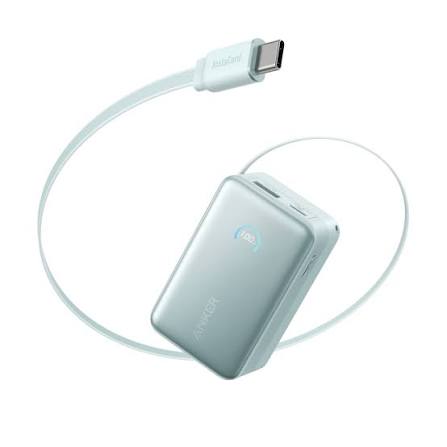
A reliable portable charger can make a major difference when you depend on your smartphone, wireless earbuds, tablet, or other mobile devices throughout the day. With the growing popularity of magnetic charging, Qi2 power banks have become an attractive option for people who want convenient wireless charging without constantly carrying separate cables and accessories. However, not every Qi2 magnetic power bank offers the same combination of charging speed, capacity, portability, safety, and usability.
Choosing the right model requires looking beyond its magnetic attachment. Features such as battery capacity, charging output, USB-C connectivity, charging efficiency, size, and additional cable options can determine whether a power bank is genuinely useful or simply convenient-looking. This guide explores the most important features to consider before buying one.
Understanding Qi2 Magnetic Charging
Qi2 is a wireless charging standard designed to provide a more consistent magnetic charging experience for compatible devices. Magnetic alignment helps the charging surface stay positioned correctly over the phone’s charging area. This can reduce the frustration associated with traditional wireless charging pads, where small movements may interrupt charging.
A Qi2-compatible power bank can be particularly useful while traveling, commuting, or working away from a power outlet. Because the charger attaches magnetically to a compatible device, users can continue holding or using their phone while charging without dealing with a cable connected directly to the handset.
Before purchasing, check whether your smartphone supports Qi2 or has compatible magnetic charging hardware. Compatibility should always be confirmed because magnetic attachment and wireless charging support are not necessarily identical features.
Battery Capacity Matters
One of the first specifications shoppers should examine is battery capacity, typically expressed in milliamp-hours (mAh). Higher capacity generally means the power bank can provide more energy before needing to be recharged.
Compact models may prioritize portability over capacity, making them convenient for short trips or emergency top-ups. Larger models can provide more charging potential but may add noticeable weight and thickness to a smartphone.
Think about how you normally use your devices. If you only need enough power to get through an evening, a compact model may be sufficient. Frequent travelers or people who spend long periods away from outlets may benefit from a higher-capacity option.
Keep in mind that the advertised battery capacity does not translate directly into the exact amount of power delivered to a smartphone. Energy is lost during voltage conversion, wireless transmission, and other parts of the charging process.
Look at Wireless Charging Output
Charging output is another major consideration. Qi2 magnetic power banks are designed to provide convenient wireless charging, but actual charging performance can vary between models and devices.
Look for clearly stated wireless output specifications rather than relying solely on marketing descriptions such as “fast charging.” Your phone also needs to support the relevant charging speed for you to benefit from it.
A good power bank should also maintain stable charging rather than repeatedly connecting and disconnecting. Proper magnetic alignment can help, but the internal charging system and thermal management are equally important.
Consider USB-C Connectivity
Wireless charging is convenient, but USB-C connectivity remains extremely useful. A USB-C port allows you to charge devices that do not support magnetic wireless charging and can often provide faster wired charging.
For even greater convenience, some buyers specifically look for a power bank with built in USB C cable. This design eliminates the need to carry a separate charging cable and can make the power bank easier to use when you’re traveling or moving between locations.
An integrated USB-C cable can be especially practical for Android phones, tablets, headphones, gaming accessories, and other USB-C devices. When evaluating this feature, check the cable’s length, durability, connector design, and supported charging output.
Examine Wired Charging Performance
A power bank’s USB-C port or built-in cable can make it considerably more versatile. Wired charging is often more efficient than wireless charging because less energy is lost during transmission.
If you regularly charge multiple devices, check whether the power bank can charge through wireless and wired connections simultaneously. Some models support multiple-device charging, while others limit output when more than one device is connected.
Also check whether the USB-C connection supports both input and output. A versatile model may allow the same port to recharge the power bank and charge another device.
Size and Weight Should Match Your Routine
A high-capacity battery can be useful, but portability matters just as much. A power bank that is too heavy or bulky may eventually stay in your bag instead of being carried everywhere.
Magnetic power banks are often designed to sit against the back of a smartphone, so dimensions and thickness can affect comfort. Consider whether you plan to keep the power bank attached while using your phone or only attach it when the battery becomes low.
For everyday use, a thinner model may be preferable. For extended travel, additional capacity may justify a little extra weight.
Check Magnetic Strength and Alignment
The quality of the magnetic attachment is an important part of the user experience. The power bank should attach securely enough that ordinary movement does not easily separate it from the phone.
However, magnetic strength should not be considered in isolation. The positioning of the charging coils is also important because correct alignment helps maintain efficient wireless charging.
If you use a protective phone case, verify whether it is compatible with the magnetic charging system. A thick or non-magnetic case can weaken the connection or interfere with alignment.
Pay Attention to Heat Management
Wireless charging naturally produces some heat, and compact power banks have limited space for dissipating it. Excessive heat can affect charging performance and may contribute to faster battery wear over time.
Look for models that include temperature monitoring, overheat protection, and other safety features. These systems can help regulate charging when the power bank or connected device becomes too warm.
Avoid choosing a product solely because it offers the highest advertised charging speed. A balanced charging system that manages heat effectively can provide a better long-term experience.
Safety Features Are Essential
A quality power bank should include multiple layers of protection. Important features can include overcharge protection, short-circuit protection, overcurrent protection, overvoltage protection, and temperature control.
Battery quality is also important. Lithium-ion and lithium-polymer batteries are widely used in portable chargers, but manufacturing quality and internal protection circuitry can differ significantly between products.
Buy from reputable manufacturers and pay attention to certifications and clearly documented specifications. Extremely cheap models with unclear battery information may not offer the same reliability as products from established brands.
Consider Pass-Through Charging Carefully
Some power banks offer pass-through charging, allowing the power bank to recharge while simultaneously supplying power to another device. This can be convenient when you have access to only one wall charger.
However, pass-through behavior varies between products. Check the manufacturer’s specifications to understand whether wireless charging remains active during pass-through operation and whether output is reduced.
This feature is useful but should not be the deciding factor if your everyday charging setup does not require it.
Display and Battery Indicators
Battery indicators can make a power bank easier to manage. Basic models may use several LEDs to show approximate remaining capacity, while more advanced products may use a digital percentage display.
Knowing how much power remains can help prevent unexpected battery depletion. A percentage display is particularly useful for travel because it provides more precise information than a simple row of indicator lights.
Build Quality and Everyday Durability
A portable charger is likely to spend considerable time inside backpacks, handbags, pockets, or luggage. Its casing should be strong enough to handle normal everyday use.
Look at the quality of the exterior materials, USB-C connector, integrated cable, buttons, and charging surface. A textured or well-designed exterior can also make the power bank easier to grip.
If you travel frequently, consider a model with a compact design that can fit comfortably alongside your other accessories without adding unnecessary bulk.
Choose Features Based on Your Needs
The best Qi2 magnetic power bank is not necessarily the one with the largest battery or highest charging output. The ideal choice depends on how you intend to use it.
For everyday smartphone users, a compact Qi2 model with reliable magnetic alignment and USB-C connectivity may provide the right balance. Travelers may prefer greater battery capacity and multiple charging options. People carrying several USB-C devices should pay particular attention to wired output and integrated cable functionality.
A power bank with built in USB C cable can be especially attractive if minimizing accessories is a priority. Meanwhile, users who mainly want convenient wireless top-ups may place greater importance on magnetic alignment, wireless performance, and compact dimensions.
Final Buying Checklist
Before purchasing a Qi2 magnetic power bank, compare its battery capacity, wireless charging output, USB-C capabilities, magnetic compatibility, size, weight, heat management, and safety protections. Also consider whether you need an integrated cable, multiple-device charging, pass-through charging, or a battery percentage display.
The best purchase is one that fits naturally into your daily routine. By focusing on practical specifications instead of marketing claims alone, you can choose a Qi2 magnetic power bank that delivers convenient charging while remaining portable, versatile, and dependable.